
Impugnar
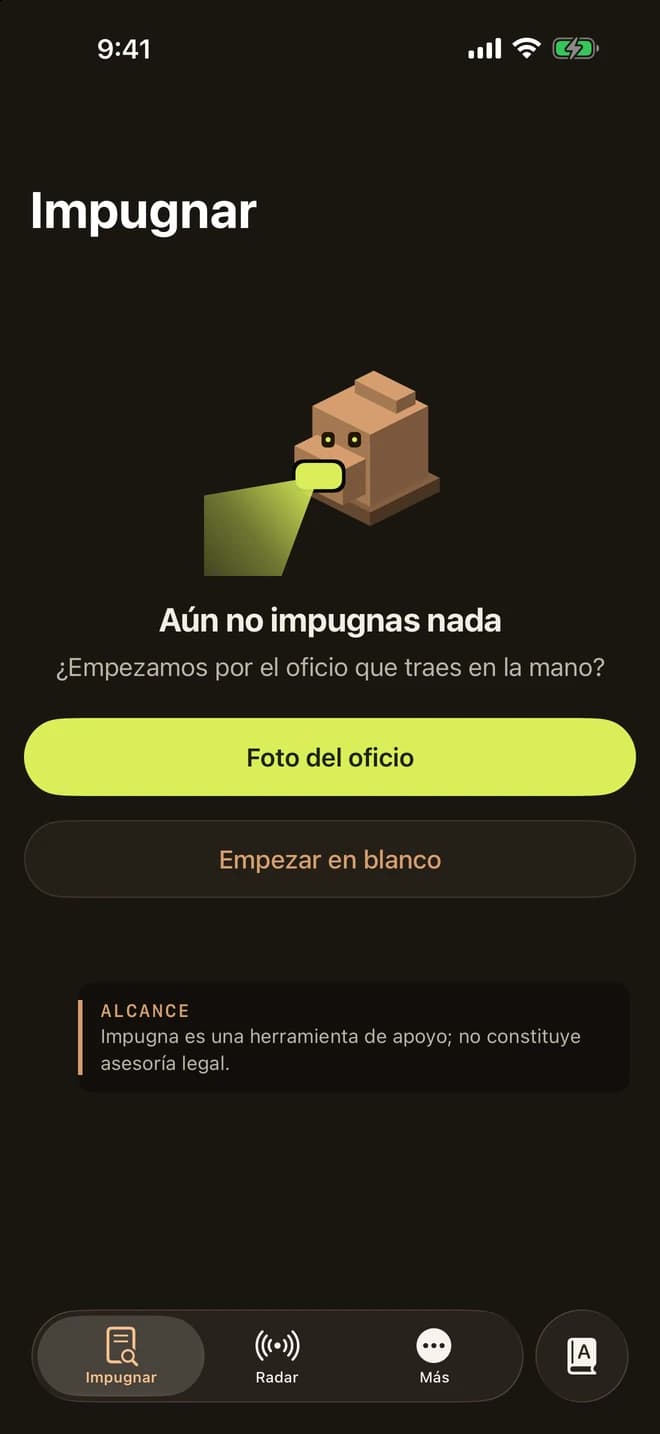
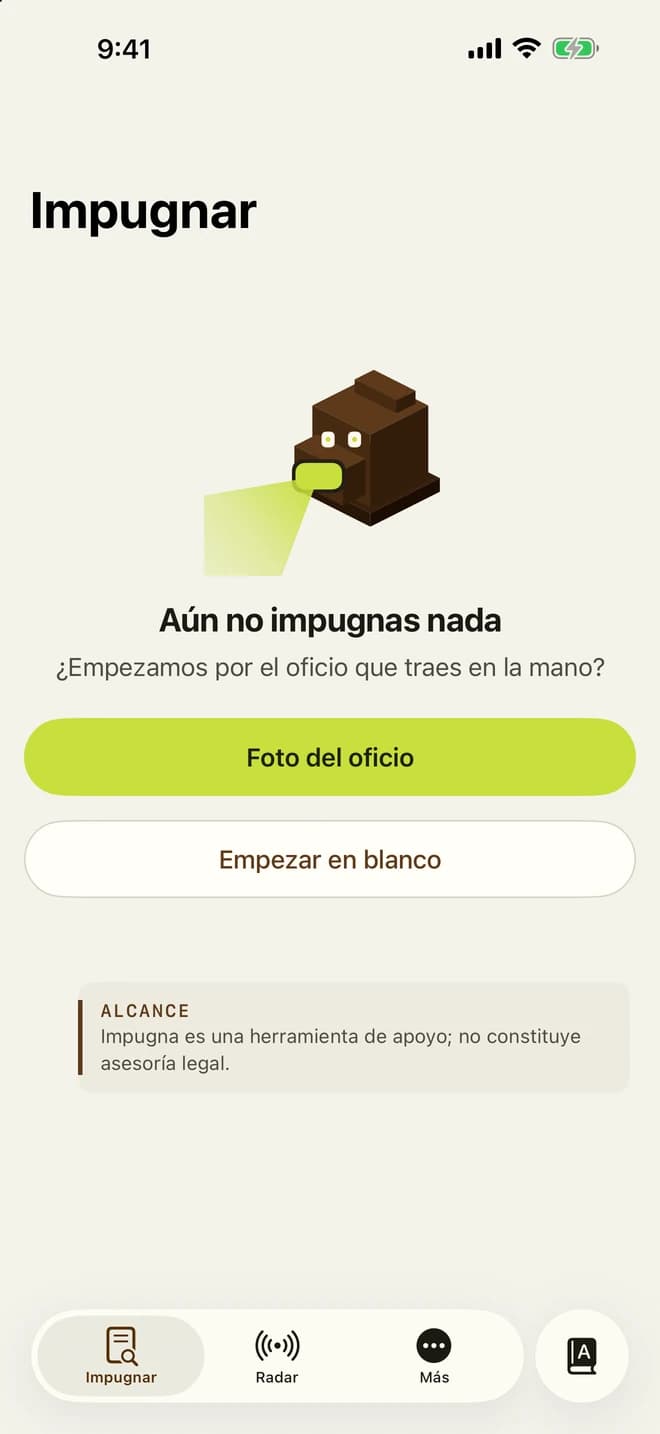
ProThe guided intake: what you were served, which system intervened, what it does to your client. It ends in a brief with numbered grounds, resolved citations and the scope notice in the footer. Exports to PDF, ready to edit and sign.
Record and signal · Mexico · 2026
Impugna takes the ruling your client walked in with —from the tax authority, from customs, from any agency already running automated systems— and turns it into a brief with numbered grounds, resolved citations and the five questions to the algorithm.
Coming soon to the App Store · iPhone · iOS 26
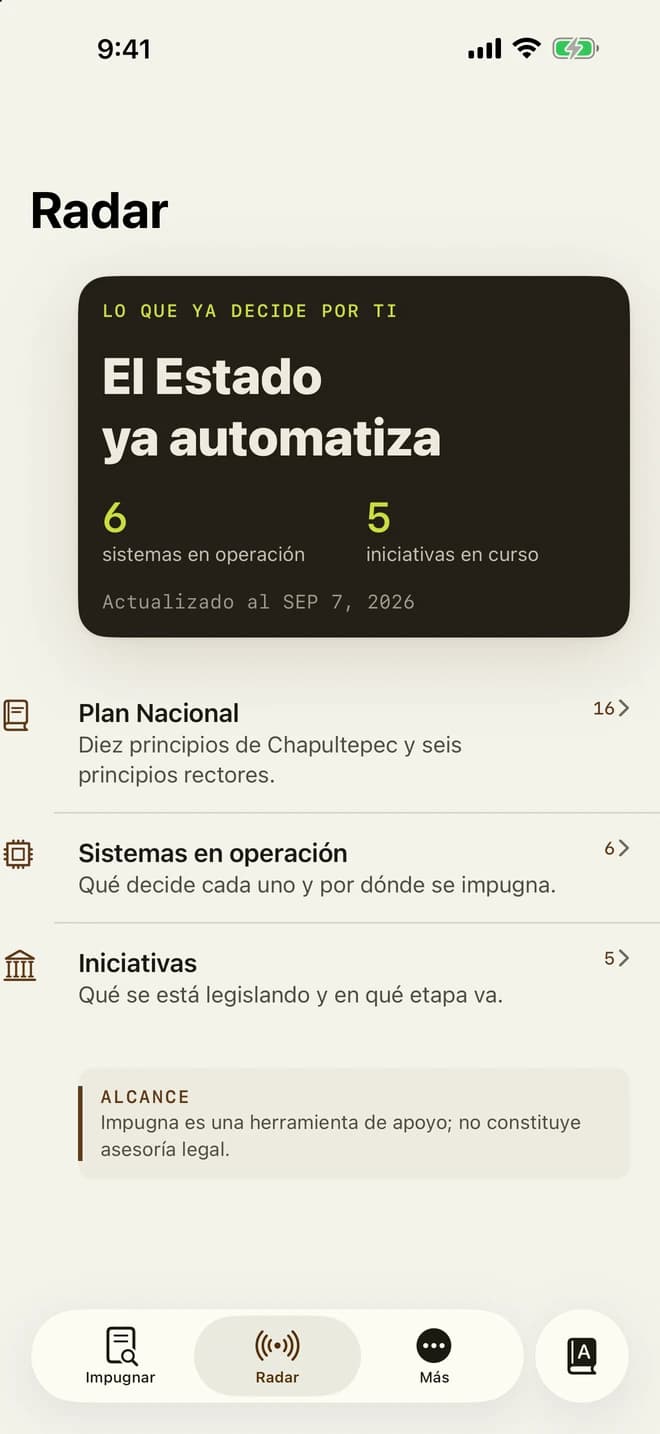
What already decides for you
The tax authority runs graph models against invoice mills. Customs has an automated inspection light. The patent office classifies filings without human intervention. And there is no general AI statute in force to cite.
…when an automated decision affects rights or legitimate interests, there must be clear avenues to identify those responsible, challenge the decision; request its review and, where appropriate, repair the harm…
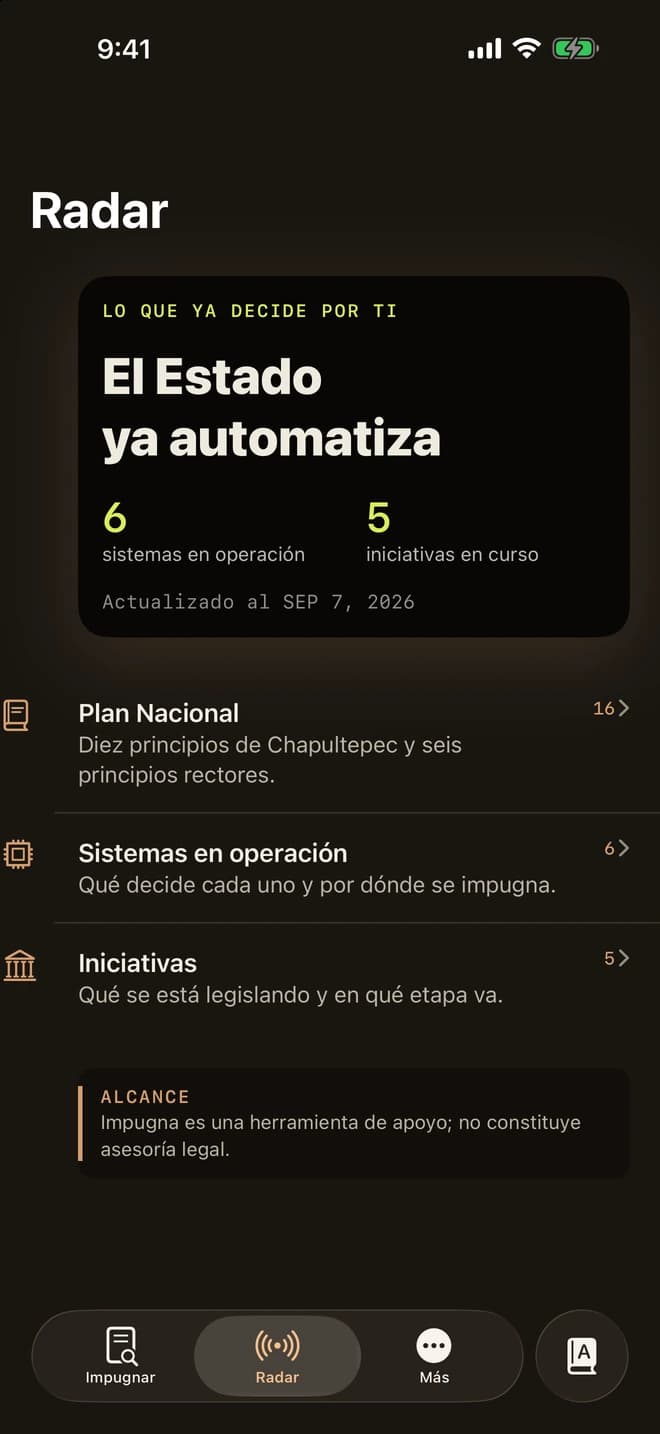
The app's Radar keeps this count, states where every figure comes from and when it was last updated. It never claims a bill is already law.
The core
An automated act that answers none of them is hard to call grounded and reasoned. The app drafts them already addressed to the authority, inside the brief — not as a checklist of tips.
Which information from the file fed the system, where it came from and under what lawful basis it was processed.
Name, version and owner: whether the model belongs to the authority itself or to a contracted vendor.
The legal reasoning behind the act, not the vendor's description of the software.
The public official who reviewed the determination, under what powers and at what point.
The avenue, the deadline and the authority before which the determination is contested.
corpus
Citations are not generated: they are resolved against a corpus taken verbatim from the Chamber of Deputies — the Constitution, the Federal Tax Code, the administrative procedure and litigation acts, both data-protection statutes, the Amparo Act and the Labour Act. The model rewrites the prose around them; it never emits an article number.
The sweep
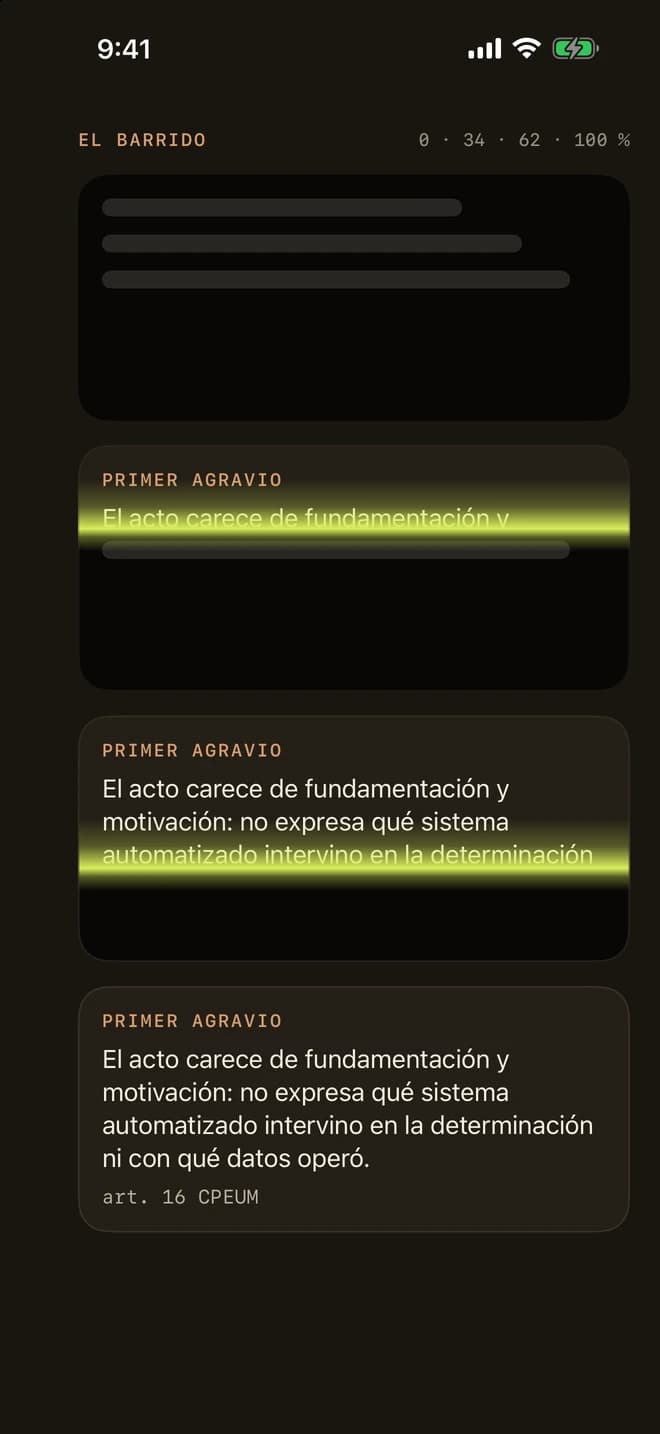
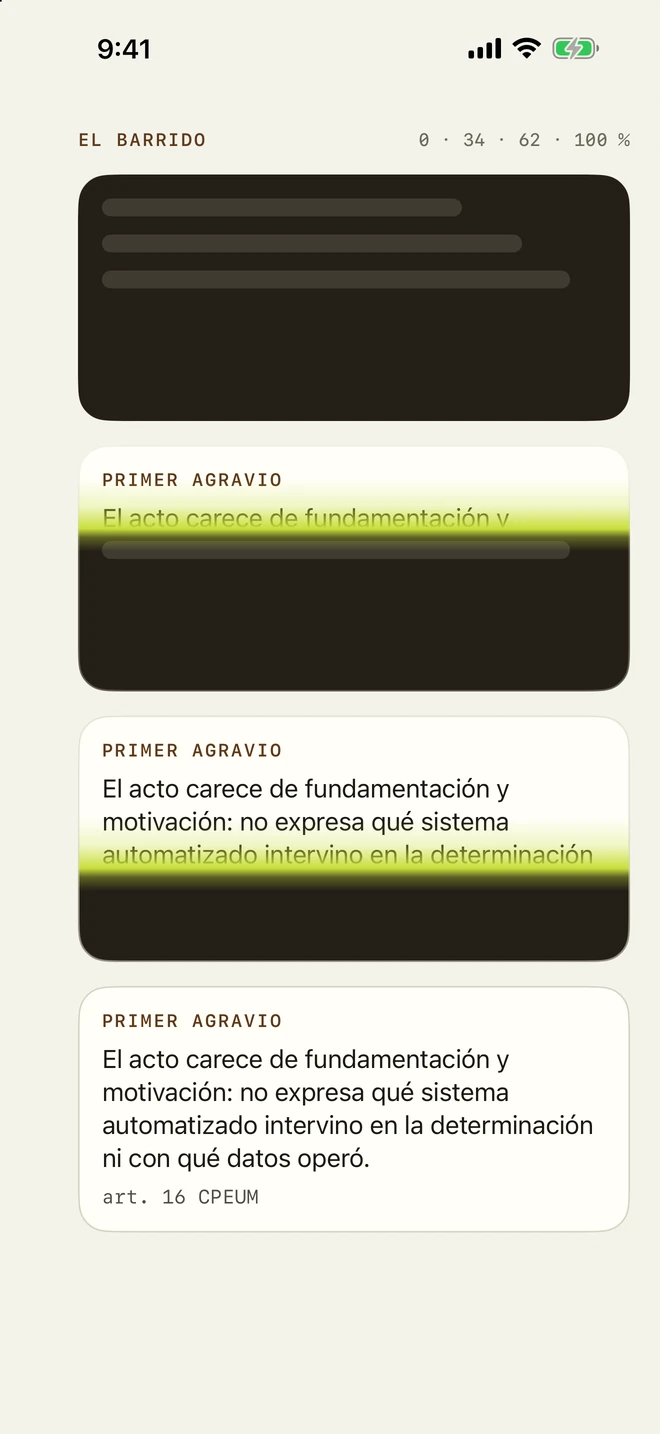
The app's central gesture is literal: the document is born opaque and a sweep makes it legible, block by block, in sequence.
Photograph the notice or start from a blank file. Text recognition happens on the device.
Five steps, one decision per screen, with a progress marker in the margin. Pause and resume at will.
On generation a marker sweep runs down the document and each opaque block resolves into legible text.
Numbered grounds, articles resolved against the corpus and the scope notice in the footer. PDF ready.
Modules
The guided intake: what you were served, which system intervened, what it does to your client. It ends in a brief with numbered grounds, resolved citations and the scope notice in the footer. Exports to PDF, ready to edit and sign.
The National AI Plan digested, the state systems already deciding, and the bill tracker: what stage each one is at and when the figure was last updated.
The terms that show up in an automated determination, explained with their source. The assistant answers on the device and closes with the citation, not with a paragraph.
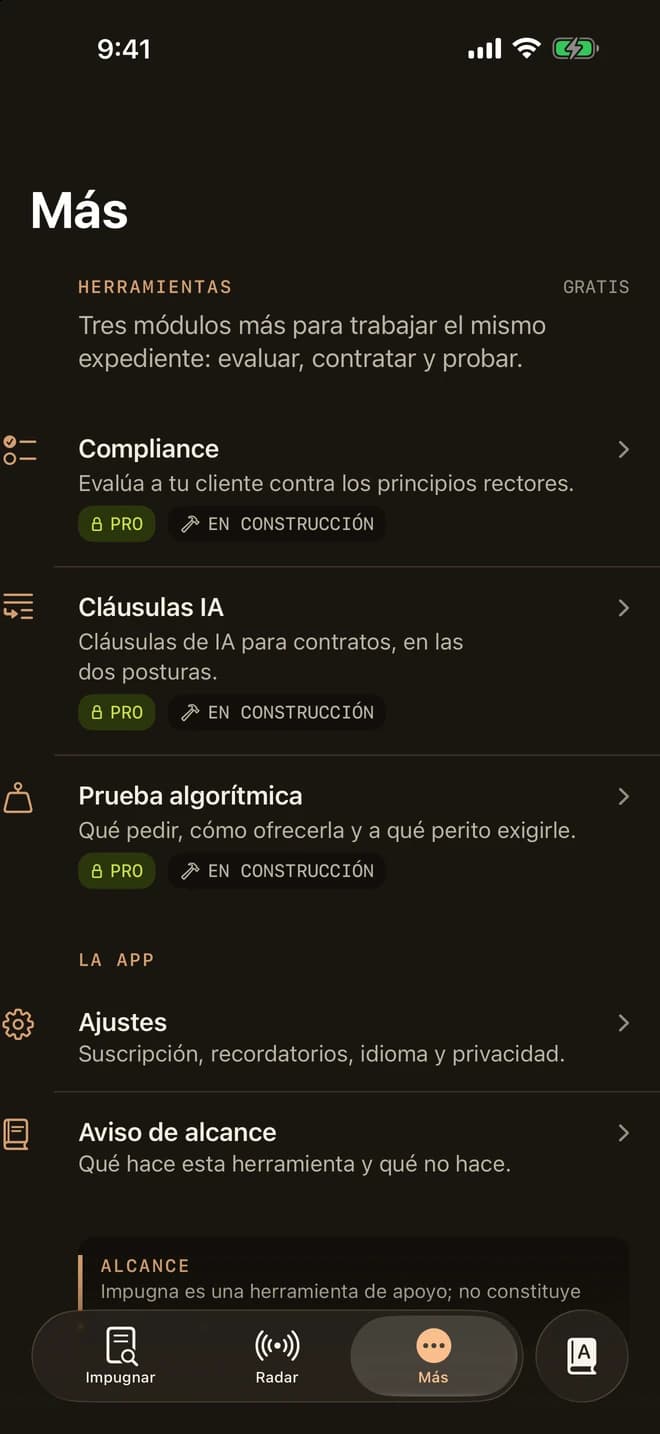
The next three modules already have their place in the app and their status visible inside it. We do not sell them as finished.
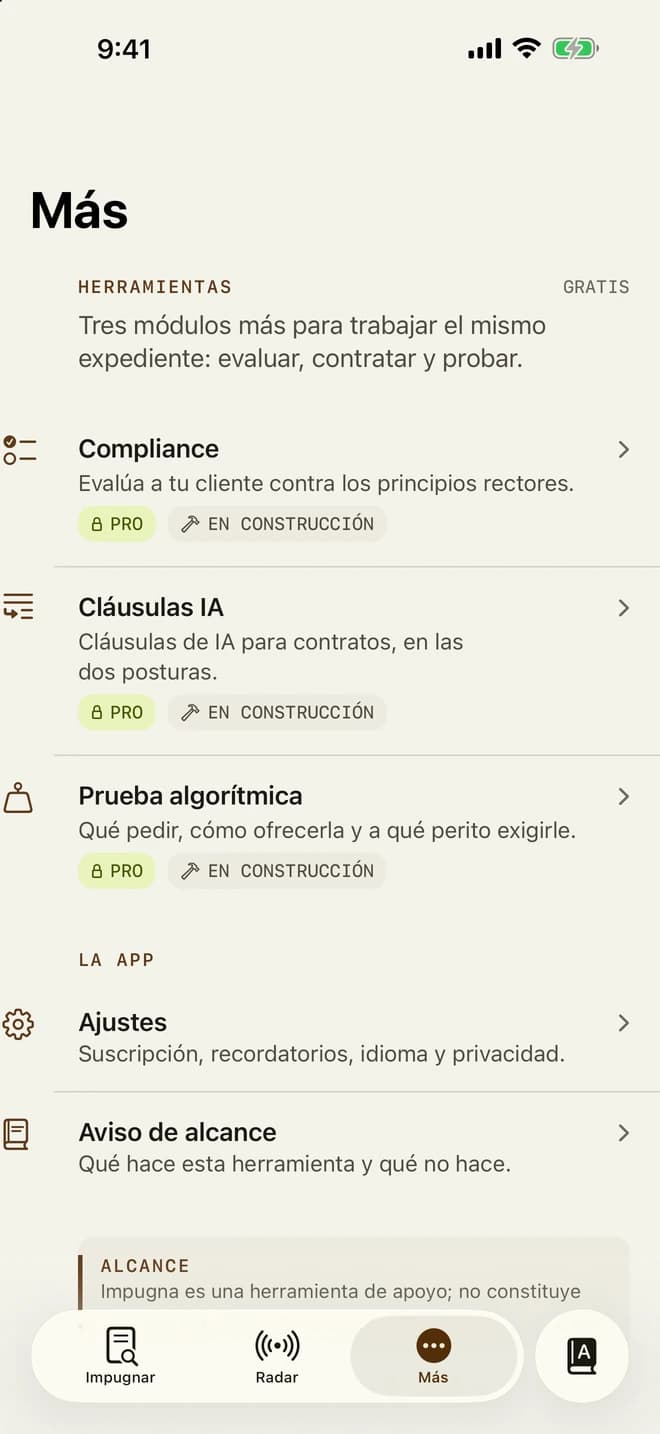
Radar and Glosario are free and will stay free. Impugnar sits inside Impugna Pro, an annual subscription billed and managed by Apple.
Privacy
There is no server of ours in the middle. There is no account to create. The legal corpus and the model live on the device, so a courthouse basement with no signal is still a working environment.

Peri · inspection lamp
“Who supervised that decision? Let's ask in writing.”
Scope
Impugna is a support tool; it does not constitute legal advice.
Drafts are addressed to the lawyer, never to their client. Judgement, signature and professional responsibility remain yours.
File status
Impugna reaches the App Store as soon as review closes. In the meantime, if you litigate tax or administrative matters and want to tell us what the flow is missing, write to us — we read it ourselves.
Coming soon to the App Store · iPhone · iOS 26 · es-MX